
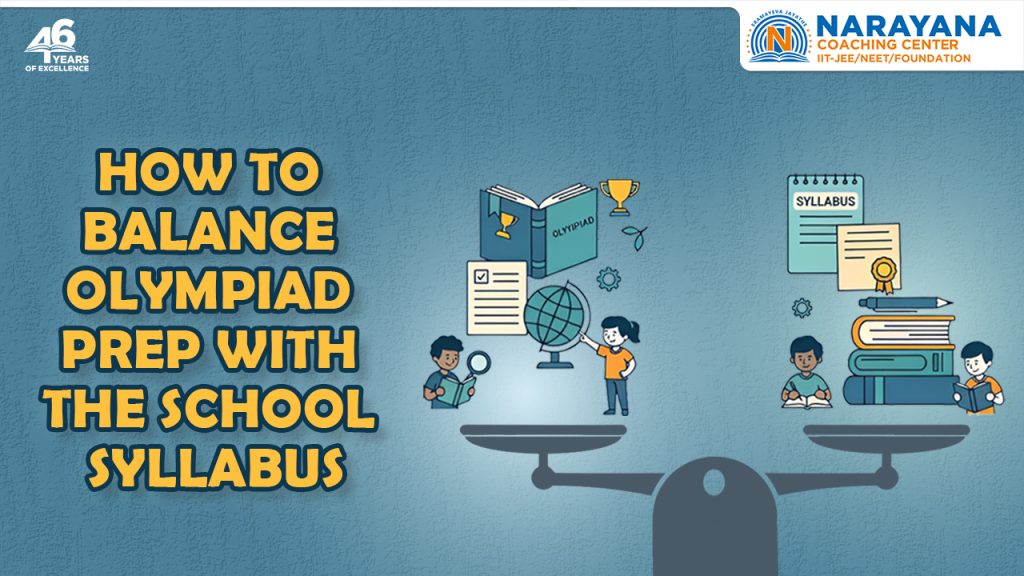
Preparing for Olympiads while keeping up with your school syllabus can feel like juggling two worlds at once. Olympiad exams such as the SOF, IMO, NSO, or NCO demand higher-order thinking, logical reasoning, and problem-solving skills. At the same time, your school curriculum ensures you build a solid foundation in every subject.
If you’re a student from Class 6 to 10, you might often ask yourself: “How do I manage both without feeling overwhelmed?”
The good news — it’s entirely possible! With the right strategy, time management, and mindset, you can strike a healthy balance between Olympiad preparation and your school studies.
Let’s explore 10 practical, tried-and-tested tips that can help you stay ahead of the curve.
1. Understand the Overlap Between School Syllabus and Olympiad Topics
Before you dive into Olympiad preparation, take a look at the syllabus for both your school and the Olympiad. You’ll notice that many topics overlap — especially in subjects like Maths, Science, and English.
Tip:
Use your school lessons as a foundation. Once you’ve mastered a topic in class, deepen your understanding with Olympiad-level questions. This approach saves time and enhances your conceptual clarity.
2. Create a Realistic Study Schedule
A well-planned schedule is your best friend. Divide your day into focused study sessions for both school work and Olympiad preparation.
Example Study Plan:
| Time | Task |
| 4:00 PM – 6:00 PM | School homework & revision |
| 6:30 PM – 7:30 PM | Olympiad topic practice |
| 8:00 PM – 9:00 PM | Mock tests / Reasoning exercises |
Pro Tip:
Use a planner or app like Notion, Google Calendar, or Trello to track your daily progress. Make sure your schedule includes short breaks to stay refreshed.
3. Follow a Topic-Wise Approach
Instead of studying multiple subjects in one go, follow a topic-wise learning plan.
For instance:
- Study “Fractions” in your school math class → Practice Olympiad-level problems on the same topic that day.
- Cover “Electricity” in science class → Attempt higher-order thinking questions related to the concept.
This integrated approach keeps your learning aligned and prevents confusion.
4. Focus on Conceptual Clarity, Not Memorization
Olympiad questions test your understanding, not rote learning. While the school syllabus might emphasize definitions and formulas, Olympiads push you to apply those concepts in new ways.
To strengthen your concepts:
- Use visual aids and videos (YouTube channels like Vedantu Olympiad, or Byju’s).
- Revise through diagrams, flowcharts, and flashcards.
- Ask “why” and “how” questions for every concept you learn.
5. Practice Olympiad-Level Questions Regularly
Regular practice is key. Olympiad questions often challenge your analytical and logical reasoning. Dedicate at least 30–45 minutes daily to solve these.
Try these resources:
- Workbooks and online mock tests from SOF, MTG, or SilverZone.
- Previous year question papers to understand exam patterns.
Remember: the more you practice, the more confident you’ll become in tackling tricky questions.
6. Balance Study and Relaxation
Studying all day without breaks leads to burnout. Olympiad prep demands consistent effort, not endless hours.
Follow the 50–10 rule: Study for 50 minutes, then take a 10-minute break.
Use that time to stretch, hydrate, or listen to calming music.
A healthy mind learns faster!
7. Seek Guidance from Teachers and Mentors
Don’t hesitate to discuss your preparation strategy with your school teachers or Olympiad mentors. They can guide you on:
- How to align your school syllabus with Olympiad topics.
- Which reference books or online courses to use?
- How to approach tricky problems logically.
Joining an Olympiad coaching program can also give you structured support and peer motivation.
8. Join Online Study Groups or Forums
Learning in a group can be motivating and fun. Join online Olympiad communities where students discuss questions, share strategies, and clear doubts together.
Websites like Vedantu, Olympiad Helper, or Meritnation offer interactive discussions and free quizzes.
Collaborative learning helps you see multiple perspectives on the same problem.
9. Revise Smartly Before Exams
A few weeks before your exams, shift your focus to revision and mock tests.
Effective revision strategy:
- Prepare summary notes for quick recall.
- Solve sample papers under timed conditions.
- Identify weak areas and work on them systematically.
Revision helps you stay calm and confident during exams.
10. Stay Positive and Believe in Yourself
Olympiad preparation can sometimes feel overwhelming, but remember — consistency matters more than perfection.
Celebrate small victories, learn from mistakes, and keep a growth mindset.
Motivational Tip:
Every Olympiad topper started just like you — with curiosity and a desire to improve. Believe in your effort, and success will follow.
Conclusion: Find Your Balance, Not Burnout
Balancing Olympiad prep with school syllabus isn’t about doing everything at once — it’s about planning smartly, managing time well, and staying disciplined. Focus on understanding rather than memorizing, and remember to take care of your mental and physical health too.
When school learning and Olympiad training go hand in hand, you not only excel in exams but also develop lifelong problem-solving and analytical skills.
So, take a deep breath, plan your schedule, and get started — your Olympiad success story begins today! 🌟
FAQs About Balancing Olympiad Prep with School Syllabus
- How many hours should I study daily for Olympiad exams?
Aim for 1–2 focused hours daily apart from school studies. Consistency is more effective than long, tiring sessions. - Can I prepare for multiple Olympiads together?
Yes, but focus on common subjects first, like Maths and Science. Avoid taking on too many exams at once. - Are Olympiad exams useful for school performance?
Absolutely! Olympiads improve critical thinking, logic, and conceptual clarity, which enhance your school grades, too. - How do I manage stress before Olympiad exams?
Practice mindfulness, get enough sleep, and revise systematically. Avoid last-minute cramming. - What are the best books for Olympiad preparation?
Books from the MTG, Pearson, and SOF Foundation series are excellent for classes 6–10. - Should I join an Olympiad coaching class?
If you struggle with self-study or need expert guidance, a structured coaching class or online program can be very helpful.