
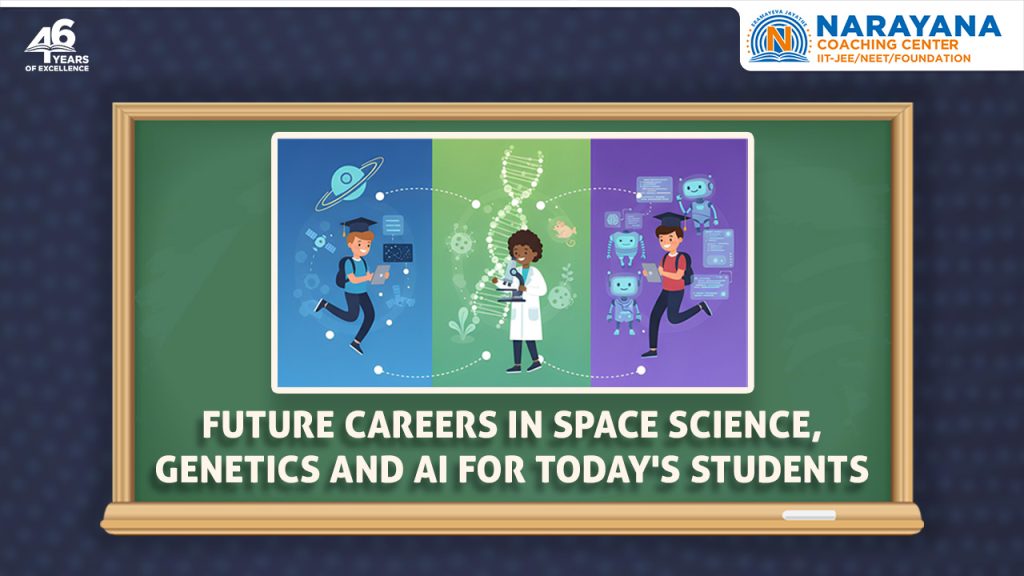
The future is arriving faster than ever. From exploring distant planets to decoding human DNA and teaching machines to think, the next generation of scientists, engineers, and innovators will shape a world beyond imagination. If you’re a student in grades 8–12, this is the perfect time to start exploring future careers in space science, genetics, and AI. These fields are not just about technology—they’re about creativity, curiosity, and solving the biggest mysteries of our universe and ourselves.
1. The Era of Space Science: Exploring the Final Frontier
A. What Is Space Science?
Space science is the study of everything beyond Earth—planets, stars, galaxies, and even black holes. It also includes the technology that helps us reach and study space, like satellites, telescopes, and spacecraft.
B. Future Career Paths in Space Science
Here are some exciting careers emerging in the world of space exploration:
- Astrobiologist – Study life in extreme environments and search for life beyond Earth.
- Aerospace Engineer – Design spacecraft, rockets, and satellites.
- Planetary Geologist – Analyze soil and rock samples from Mars, the Moon, and asteroids.
- Space Medicine Specialist – Keep astronauts healthy during long space missions.
- Space Tourism Expert – Help design safe and enjoyable experiences for future space travellers.
C. How Students Can Prepare
- Focus on STEM subjects (Science, Technology, Engineering, and Math).
- Join space clubs or participate in programs like NASA’s STEM Engagement or ISRO’s Young Scientist Programme.
- Learn computer coding—space missions rely heavily on data analysis and automation.
D. Why It’s Exciting
Imagine being part of a team that discovers a new planet or helps humans live on Mars! Space science is not just about looking up—it’s about building the future of humanity beyond Earth.
2. The Genetic Revolution: Unlocking the Code of Life
A. What Is Genetics?
Genetics is the branch of biology that studies genes—tiny sections of DNA that determine how living things look, grow, and function. With modern tools like CRISPR and gene editing, scientists can now change genes to cure diseases or even design crops that can survive harsh climates.
B. Emerging Careers in Genetics
The 21st century is known as the Century of Biology, and genetics sits at its heart. Some of the most in-demand careers include:
- Genetic Engineer – Modify DNA to develop cures for genetic disorders.
- Bioinformatician – Use AI and big data to analyze genetic information.
- Forensic Geneticist – Solve crimes using DNA evidence.
- Pharmacogeneticist – Develop personalized medicines based on DNA.
- Agricultural Biotechnologist – Create more sustainable crops and livestock.
C. How Students Can Prepare
- Study biology, chemistry, and math
- Participate in science fairs or biology Olympiads.
- Learn basic computer programming—many genetic tools use software to analyze DNA.
- Watch documentaries or take online courses about genetics (e.g., from Coursera or Khan Academy).
D. Why It’s Exciting
Genetics has the power to cure diseases, extend human life, and protect the planet. Students who pursue this path will play a crucial role in shaping the health and sustainability of future generations.
3. Artificial Intelligence: Teaching Machines to Think
A. What Is AI?
Artificial Intelligence (AI) is the science of creating machines that can perform tasks that normally require human intelligence—like recognizing speech, understanding language, or even driving cars. AI is everywhere: in social media, video games, online shopping, and healthcare.
B. Future Careers in AI
AI is transforming every industry. Here are some future-proof careers:
- Machine Learning Engineer – Teach computers how to learn from data.
- Robotics Engineer – Design and program intelligent robots.
- AI Ethicist – Ensure AI systems are fair, transparent, and ethical.
- Data Scientist – Analyze massive datasets to discover patterns and insights.
- AI Research Scientist – Develop new algorithms and technologies.
C. How Students Can Prepare
- Learn to code in Python or JavaScript.
- Take online AI courses or participate in coding competitions.
- Focus on math, physics, and computer science.
- Join robotics clubs or participate in STEM hackathons.
D. Why It’s Exciting
AI is shaping the way we live, work, and play. By combining creativity and technology, students can build AI systems that solve real-world problems, from predicting climate change to helping doctors diagnose diseases faster.
4. The Power of Interdisciplinary Learning
In the future, careers won’t fit into neat boxes. The most innovative scientists and engineers will blend skills from multiple fields:
- Astrobiologists use both genetics and space science to study life on other planets.
- AI-driven geneticists use algorithms to decode DNA faster.
- Space AI engineers develop autonomous robots for Mars exploration.
For students, this means the more diverse your knowledge, the better your opportunities. Curiosity, creativity, and problem-solving will be the most valuable skills of all.
5. How Students Can Prepare for the Future Today
| Step | What to Do | Why It Matters |
| 1 | Focus on STEM subjects | Builds a strong foundation for all future tech careers. |
| 2 | Join school or community science clubs | Encourages teamwork and creativity. |
| 3 | Take free online courses (Coursera, Khan Academy, NASA) | Learn advanced topics early. |
| 4 | Learn coding | Vital for AI, space tech, and genetic analysis. |
| 5 | Stay curious and read science news | Keeps you updated with cutting-edge discoveries. |
6. Frequently Asked Questions (FAQs)
Q1. What’s the best field to choose among Space Science, Genetics, and AI?
Each field offers unique opportunities. Choose based on your interests—space science if you love astronomy, genetics if you’re passionate about biology, and AI if you enjoy computers and problem-solving.
Q2. Do I need to be a math genius to work in these fields?
Not necessarily! While math is important, curiosity, creativity, and persistence are equally valuable.
Q3. Can I combine these subjects in my future career?
Absolutely! The future is all about interdisciplinary learning—AI is used in genetics and space exploration today.
Q4. What subjects should I study in high school to prepare?
Focus on science, math, and computer programming. Also, participate in labs and practical projects.
Q5. Are there scholarships or internships for high school students in these areas?
Yes! Programs from NASA, ISRO, MIT, and Google AI offer student engagement opportunities worldwide.
Q6. How can AI help space exploration or genetics?
AI helps analyze space data, navigate spacecraft, and even predict genetic diseases through data analysis.
7. Conclusion: Your Future Begins Now
The future belongs to dreamers who dare to learn. Whether you’re fascinated by the stars, the secrets of DNA, or the intelligence of machines, the world needs young minds ready to explore, innovate, and create.
Start small—join a coding club, read about space missions, or conduct a simple biology experiment. Every big dream starts with a single step. The careers of tomorrow are waiting for students like you to bring them to life. 🌟