
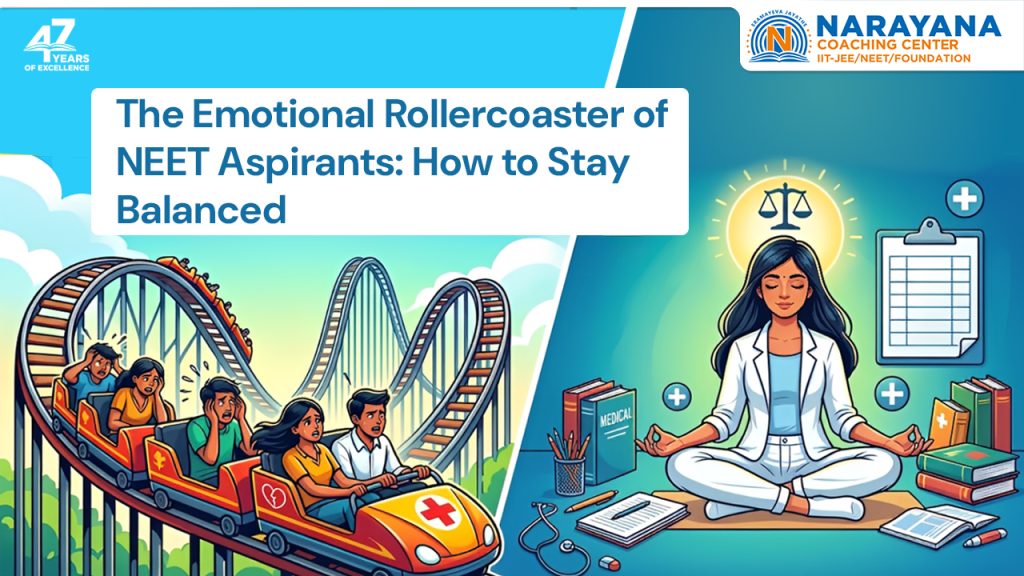
Every year, lakhs of students begin their journey toward one dream—cracking NEET and securing a seat in a medical college. The road to becoming a doctor is filled with ambition, discipline, and countless hours of preparation. But behind the books, mock tests, and revision schedules lies something many people overlook—the emotional journey of a NEET aspirant.
One day, you feel unstoppable after scoring well in a mock test. The next day, a difficult chapter or a low score can make you question everything. Stress, self-doubt, comparison, fear of failure, and burnout often become silent companions during NEET preparation.
If this sounds familiar, you are not alone. NEET preparation is not just an academic challenge—it is an emotional one too. Learning how to stay mentally and emotionally balanced can make a major difference in both performance and well-being.
Why NEET Preparation Feels Like an Emotional Rollercoaster
Preparing for NEET involves much more than studying Biology, Physics, and Chemistry. Aspirants face multiple pressures simultaneously:
1. High Expectations
Many students carry expectations from parents, teachers, relatives, and most importantly, themselves. Statements like “You must crack NEET this year” or “You have so much potential” may sound motivating initially but can slowly turn into pressure.
When expectations feel too heavy, every small setback begins to feel like a major failure.
2. Fear of Competition
NEET is one of the most competitive exams in India. With lakhs of aspirants competing for limited seats, students often feel anxious about where they stand.
Questions such as:
- “Am I studying enough?”
- “What if others are ahead of me?”
- “What if I fail?”
can constantly occupy the mind and drain confidence.
3. Academic Ups and Downs
Mock test scores can strongly affect emotions. A good score may bring excitement and motivation, while one poor performance can trigger panic and disappointment.
But here is something important to remember: one test never defines your capability.
NEET preparation is a long journey, and progress rarely happens in a straight line.
4. Isolation and Social Pressure
Many aspirants reduce outings, hobbies, and social interactions to focus completely on studies. While dedication matters, extreme isolation can sometimes lead to loneliness and emotional exhaustion.
At the same time, seeing friends on social media enjoying life can create feelings of missing out or frustration.
Common Emotions Every NEET Aspirant Experiences
Anxiety Before Tests
The fear of forgetting concepts or performing poorly often increases before mock exams or major milestones.
A little nervousness is normal—it can even improve focus. But constant anxiety can reduce concentration and confidence.
Self-Doubt
Many students silently wonder:
“Maybe I am not smart enough for NEET.”
This feeling usually appears after difficult topics or low scores. However, struggling with concepts does not mean you are incapable—it simply means learning is still happening.
Burnout
Studying continuously for long hours without breaks can make students feel mentally exhausted. Signs of burnout include:
- Difficulty concentrating
- Irritability
- Feeling emotionally drained
- Loss of motivation
- Constant tiredness despite sleeping
Burnout does not happen because students are weak—it happens because they are pushing themselves too hard for too long.
Guilt
Ironically, many aspirants feel guilty while resting.
Watching a movie, taking a break, or sleeping extra may trigger thoughts like:
“Others are studying right now.”
But rest is not wasted time. Recovery helps the brain process information and improves productivity.
How NEET Aspirants Can Stay Emotionally Balanced
The good news? Emotional balance is not about avoiding stress completely. It is about learning how to handle it better.
Here are practical strategies that can help.
1. Stop Measuring Yourself Only Through Scores
Mock tests are tools, not judgments.
Instead of asking:
“How much did I score?”
ask:
“What did I learn from this test?”
A lower score can reveal weak areas and help improve strategy. Treat mistakes like feedback rather than proof of failure.
Progress matters more than perfection.
2. Build a Realistic Study Routine
Many aspirants create impossible timetables with 14–16 study hours daily.
When those schedules fail, frustration grows.
Instead:
- Create manageable daily targets
- Include revision time
- Take short breaks between sessions
- Keep flexibility for difficult days
Consistency beats unrealistic intensity.
A balanced routine helps prevent emotional crashes.
3. Protect Your Mental Space from Comparison
Comparison is one of the biggest emotional traps during NEET preparation.
You may hear stories like:
“Someone completed the syllabus twice.”
“Someone studies 15 hours daily.”
Remember: every student learns differently.
Your preparation strategy should match your pace, strengths, and learning style—not someone else’s routine.
The only useful comparison is with your past self.
4. Take Care of Sleep, Food, and Exercise
Many students sacrifice sleep during preparation, believing longer study hours guarantee success.
In reality, poor sleep affects:
- Memory retention
- Concentration
- Mood stability
- Problem-solving ability
Aim for proper sleep and balanced meals.
Even 20–30 minutes of walking, stretching, or light exercise can significantly reduce stress and improve focus.
A healthy body supports a focused mind.
5. Keep One Stress-Relief Activity
Your life should not become only about NEET.
Spend some time doing something you genuinely enjoy:
- Listening to music
- Drawing
- Playing a sport
- Journaling
- Talking to friends
- Watching something relaxing
A short mental refresh can help you return to studies with better focus.
6. Talk About What You Feel
Many aspirants silently carry emotional pressure.
If stress feels overwhelming, talk to someone:
- Parents
- Teachers
- Mentors
- Friends
- Counselors
Speaking openly can reduce emotional burden and offer new perspective.
You do not have to handle everything alone.
7. Accept That Bad Days Are Part of the Journey
Some days will feel productive.
Other days may feel messy and disappointing.
That is normal.
Even top rankers experience confusion, stress, and setbacks.
One bad chapter, one bad week, or one bad mock test does not decide your future.
What matters most is returning to the process.
Remember the Bigger Picture
It is easy to forget during preparation, but NEET is an exam—not your identity.
Your marks may reflect preparation at one moment, but they do not measure intelligence, worth, or potential as a person.
Behind every future doctor is a student who struggled, doubted themselves, felt overwhelmed, and still kept going.
Success in NEET is not just about intelligence. It is also about patience, resilience, consistency, and emotional balance.
Conclusion
The journey of a NEET aspirant is filled with highs and lows. Motivation rises and falls, confidence fluctuates, and pressure can sometimes feel overwhelming. But emotional struggles during preparation are far more common than they appear.
Staying balanced does not mean never feeling stressed or anxious. It means learning how to manage emotions without letting them control your preparation.
Study hard, but also care for your mental well-being. Celebrate small wins, take healthy breaks, and remember that progress takes time.
Because behind every successful NEET aspirant is someone who learned not just how to study—but how to stay emotionally strong through the journey.